
The sturdiest plants of my childhood grew from bulbs. Those reliable little balls of energy would poke leaves and stems up through the dirt every spring – daffodils, especially, multiplying each year to create enormous sprawls of color. We grew up surrounded by my grandfather’s well-established gardens, making bouquets and taking the splendor for granted. As I got a bit older I loved to dig up the bulbs on a fall afternoon, separate them to encourage growth, and reshape the drifts. I’m partial to single varieties, doubles being a bit too showy for my liking, and my favorite is the delicate Narcissus Actaea, known as the Original Poet’s Daffodil. Each slender stem produces a simple but elegant bloom that is startlingly white with a yellow trumpet edged in red.
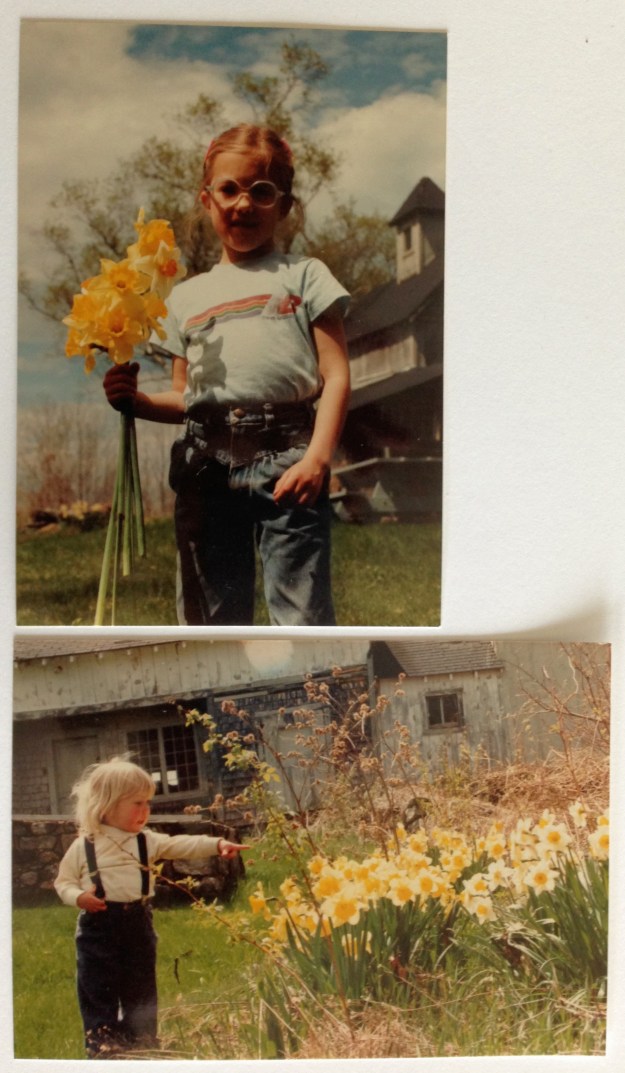
Me, holding daffodils. My sister, pointing at some. 1988.
This is our second spring in this house, and the landscaping choices of the previous owners relied heavily on expanses of black plastic covered in 2-inch rock. We’re gradually undoing that approach, and a great effort was made last summer to clear the area around a crabapple tree in our front yard and get down to dirt. In the fall, much later in the year than was practical, we ordered some bulbs from Holland (truly – the box was stamped by customs!). We dug three holes near the recently liberated trunk of the crabapple tree and applied a layering approach that I found on the internet. The concept, which would also work in a container, was to build a sort of lasagna of bulbs and soil and compost, allowing for various types of flowers to exist in one little plot. Daffodils went in first, then the soil and compost, the tulips, more soil and compost, and then the crocus bulbs (and more soil). I planted the remaining daffodils and tulips in the backyard, my frozen fingers reminding me that the third week of November was a bit late for such a project. The chill in the air and the soil made me wonder if any spring blooms would even emerge.
The verdict is in: the bulbs from Holland survived their first Minnesota winter! In the front yard, a few crocus leaves and blooms popped up, and the tulips seem to be flourishing. The daffodils in those same spots didn’t make an appearance, so perhaps they were too deep in the layering approach. The tulips in the backyard were chomped off at the base (leaves and stems) before they had a chance to prove themselves, but the daffodils scattered amongst them have bravely soldiered on amidst the destruction. In any case, I’ve deemed the effort a success. We’ll mulch around the plants and seed the nearby lawn later this spring, and in time it will look much less like a barren corner bursting with tulips, and much more like intentional landscaping with a pretty spring flower feature. I’m excited to see how they fill in each year. Now that they are more or less established, I can plant around them and see where it goes. Some Narcissus Actaea might fit in here quite nicely.
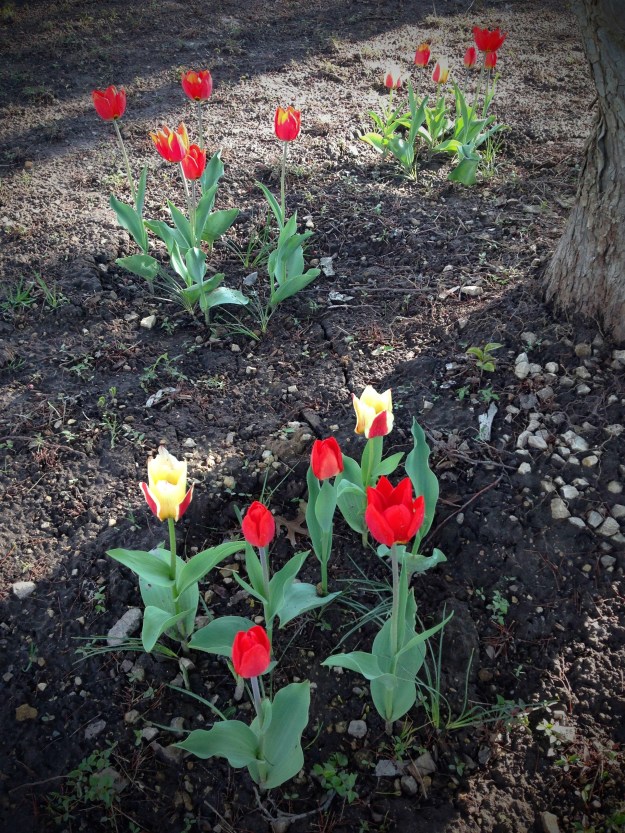
Tulips from Holland, sharing a Minnesota plot of land with crocus leaves.
A note about resilience: half a dozen scraggly lily leaves were sticking out of a rocky hillside on our property last summer. Since we were replacing the hill with a retaining wall and a shed, we dug up the lilies, pulled the rocks from the bulb clumps (!), and lined up the sad row of yellowing leaves in a makeshift garden spot next to the raised beds. We threw in a bit of compost and hoped they would survive the mid-season move. Survive they did – each clump burst forth this spring with a bold, strong presence. It will be fun to see them bloom and determine how they might brighten up other spots in our yard.
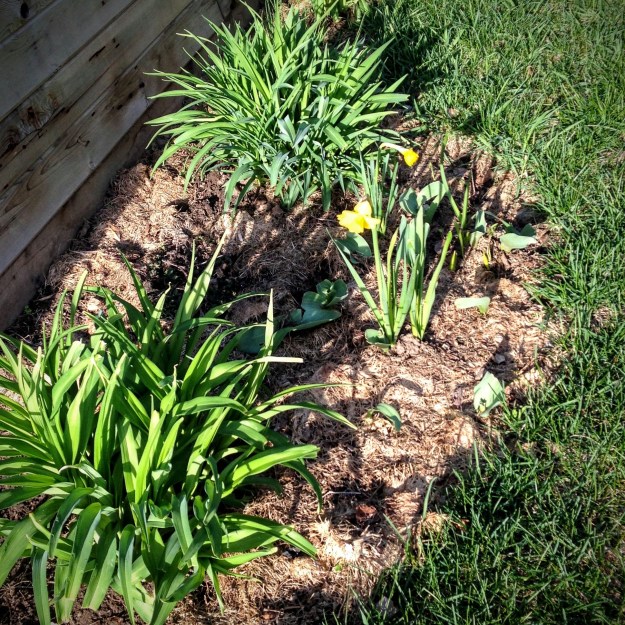
Bold lilies, chomped tulips, brave daffodils.
 pajamasquidblog.com