Category Archives: eat

Artichokes

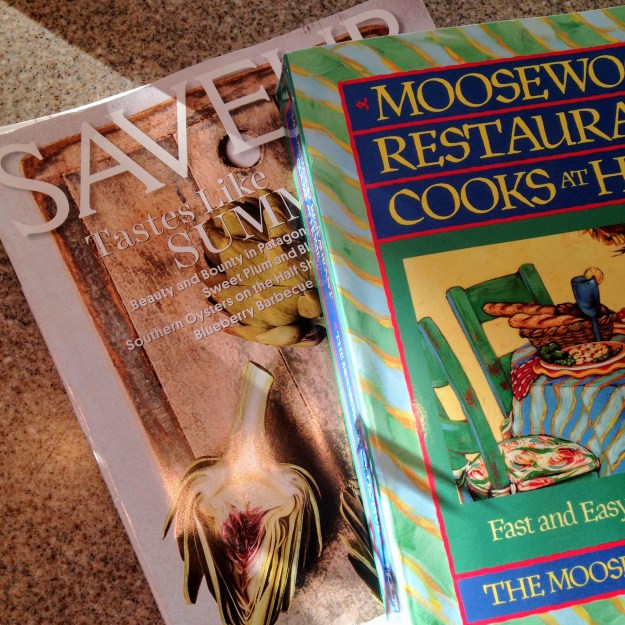
Artichokes are so dramatic, in all their spiky mystery. Last summer, Saveur magazine went so far as to feature them on the cover, split in half so you could see their inner workings. There are, of course, the jarred and marinated artichoke hearts that surface in pasta salads and various chicken dishes, but that’s not what I’m referencing here. Some recipes call for frozen artichokes, which I have never found, but generally replace with canned artichokes. These flavors are familiar, but I believe a real artichoke experience can only be found by eating one whole, leaf by leaf, as a sort of vegetable adventure.
img_4868

As a kid, we would occasionally have artichokes for dinner – in my memory, they would emerge from a steaming pan, sprinkled with minced garlic. We would pull off the leaves, capturing the delicious meat of each one by scraping with our teeth, and tossing the inedible parts into a central discard bowl. When you got to the center, and navigated around the prickly choke itself, you were rewarded with the heart – a dense chunk of deep but subtle flavoring; the prize inside the vegetable. There was a garlicky mayonnaise to dip everything into, and a real sense of accomplishment to be gained.

As a grown up, I’ve tried a few times to recreate this experience. I’ve known how to prep them – turned on the side, it’s easy to trim 1/4 inch off the artichoke stem and about the same off the top. Kitchen shears are handy for clipping the barbs off the remaining leaves, and with that, they’re ready to cook. I tried steaming them, stem down, and it took close to 90 minutes. I tried steaming them stem up, which was faster, but didn’t allow for any seasonings to nestle in between the leaves as I remembered. I’ve also looked up aioli recipes, and they tend to begin at the raw egg stage, where I want them to begin at the mayonnaise stage. I’ve felt each of these times that I was not quite achieving the goal.

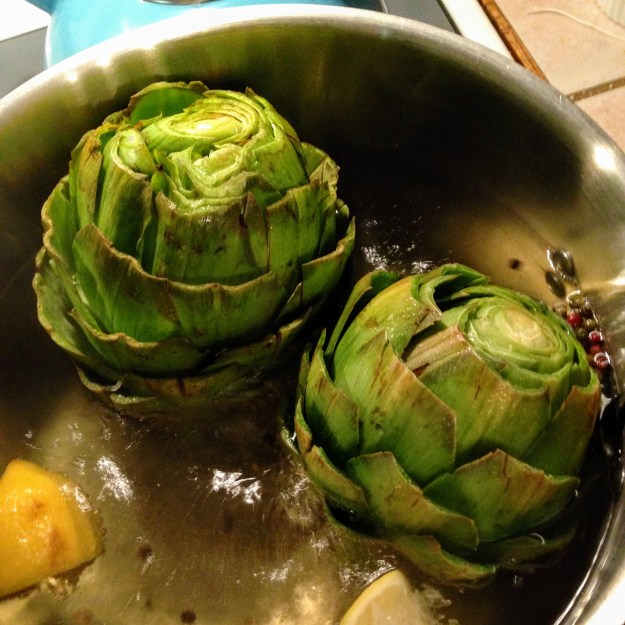
Last weekend, with the assistance of the Moosewood cookbook I’ve had for more than 15 years, everything came together. To my surprise, it includes both “Easiest Artichokes” and “Aioli” recipes – and the suggestion that they be paired. They recommend settling the prepped artichokes, stem down, in about 4 inches of boiling water – and adding whatever seasonings you like to the water itself or sprinkled over the top. In this arrangement, a significant amount of artichoke was above water, but almost immediately, a delightfully artichoke-y steam began sneaking out from the edges of the lid. Half an hour later, they were ready!
img_4861

Eating an artichoke necessarily slows down a meal and makes it an event. As you work your way through the tough outer leaves, dipping each into the aioli and only eating the edible parts, each bite gets more tender and delicious. When the leaves give way to the poky, feathery, choke at the center, try to pull it back from the edges gently. With a lot of patience and the steady pressure of a butter knife, it is possible to extract and discard the entire choke without cutting into the heart at all – think of this as a culinary challenge. The same caution should be taken when trimming away any tough bits on the stem end, as you want to salvage as much of the heart as is possible (to eat, obviously).

The aioli recipe began with a cup of mayonnaise, and the addition of a bit of garlic, lemon juice, and olive oil resulted in an intense and perfectly complementary dipping sauce for the artichokes. There was more than we needed for the meal, but the leftovers have improved our sandwiches all week.

Whole artichokes for dinner are delicious, and surprisingly easy to make. California artichokes (which you’ll find at your grocery store, probably nestled in a small basket next to the eggplants and leeks) are at their peak from March to May. Select those that are about the size of a grapefruit, and primarily pale green in color. Here are the recipes, adapted slightly from the Moosewood Restaurant Cooks at Home:

Easiest Artichokes

  • 4 whole artichokes
  • optional, to flavor the cooking water: any combination of bay leaves, peppercorns, lemon juice, vinegar, garlic, capers, or fennel seeds
  • optional, to drizzle over the cooked artichokes: juice of 2 lemons, and 4 tsps of olive oil

Bring 4 inches of water to a rapid boil, add whatever flavorings you choose, and trim either end of each artichoke to create a flat base and a flat top. Clip the barbed leaf tips for a nice look – though they will soften when cooked.

When the water boils, ease the trimmed artichokes, stem end down, into the pot. Cover, lower the heat, and simmer for 25-40 minutes, until the bottoms of the artichokes are easily pierced with a fork and the leaves are easy to pull off.

Drain the artichokes, place them upright on a serving plate, and drizzle lemon juice and olive oil over them if you like. Serve immediately (or, chill them and serve later – they’ll last for a few days in the refrigerator if stored in a tight container).

Aioli

  • 1 cup mayonnaise
  • 3 Tbsp fresh lemon juice
  • 2 Tbsp olive oil
  • 3-4 garlic cloves, minced
  • black pepper to taste

In a small bowl, combine all ingredients. Cover and refrigerated, aioli keeps for about a week.
Fruit Cobbler

2011-08-09 20.25.35_Chicago_Illinois_US

Cobbler isn’t pretty, but this bakery dessert tasted good and looks nice.

Fruit desserts are my favorite sweet option. I like the tiny jewel-like things that fancy bakeries always have on display, but those are beyond my repertoire. Cobblers are more my speed. My mom made a blueberry peach cobbler when I was growing up, usually in the winter, I think, because I remember that she used frozen blueberries and canned peaches. A note about blueberries: frozen or fresh, she always used the low-bush ones from Maine (for muffins, and pancakes, and on cereal, too) not the giant high-bush ones that are easily found in the grocery store each summer. It isn’t just a size difference. Have you ever compared an apricot with a peach? The flavor and texture and general soul differs. The same can be said for blueberry varieties. The little ones are sold frozen in the Midwest, if you do your research or manage to stumble upon them. I also suspect they grow in Minnesota and Wisconsin, but I don’t have a direct source for such delicacies.

In any case, I tried following the cobbler recipe a few times in my early years of cooking. I would go out of my way to obtain peaches and blueberries (canned and frozen, respectively), opting for a different recipe entirely if I didn’t have those two types of fruit on hand. Once I forgot to drain the peaches, which made the whole thing a bit more like soup than cobbler, though it didn’t harm the flavor. I’ve tried doubling the crust, because it is delicious – but then it comes out of the oven baked unevenly, with big spoonfuls of raw batter sitting in the boiling fruit. With patience and more attempts (or using a different recipe entirely), I could probably get the temperature and timing right to make the double batter version work, but in the meantime I’ve gone back to the original ratio.

Where I have successfully improvised with this recipe is through the somewhat recent realization that this is really a fruit cobbler recipe, and any 3 cups of fruit will do (though a combination of berries and stone fruit usually turns out best). Frozen, canned (remember to drain the fruit, in this case), or fresh is fine. This is ideal in summer, when you’re awash in berries you can’t eat fast enough – or in winter, when a fruit dessert is just the thing to boost your spirits. I have a “leftover strawberries and blackberries that won’t otherwise get eaten, topped off with a nectarine to make 3 cups” cobbler in the oven right now, and it smells incredible.

Over the weekend, I visited my sister in Seattle and she made an incredible apple-rhubarb cobbler, entirely using fruit freshly picked from her backyard. We discussed our mutual preference for fruit-on-the-bottom cobbler, as we’ve discovered that some people actually make fruit-on-top cobbler. Hers was delicious, but I forgot to get the recipe (which I think was from her King Arthur Flour Baking cookbook), and so I’m making my old standard this evening. Here it is, in case you’re inclined to give it a shot:

Blueberry Peach Cobbler 

  • 1 Tbsp cornstarch
  • 1/4 cup brown sugar
  • 1/2 cup cold water
  • 2 cups peaches, cut into bite-sized chunks
  • 1 cup blueberries
  • 1 Tbsp butter
  • 1 Tbsp lemon juice
  • 1/2 cup flour
  • 1/4 cup sugar
  • 3/4 tsp baking powder
  • 1/4 tsp salt
  • 1/4 cup milk
  • 2 Tbsp vegetable oil
  • 2 Tbsp sugar
  • 1/4 tsp nutmeg

Preheat the oven to 375.

Combine the cornstarch, brown sugar, and cold water in a saucepan on the stove. Heat on medium, whisking until thick. Add peaches and blueberries (or whatever 3 cups of fruit suits you), the butter, and the lemon juice. Stir together and heat until everything seems nicely mixed up and somewhat thick and bubbly and smelling nice.

Meanwhile, in a separate bowl, mix together the flour, 1/4 cup of sugar, baking powder, and salt, stirring well. Add the milk and oil and stir until smooth. In yet another small bowl, stir together the 2 Tbsp of sugar with the nutmeg.

Pour the fruit into a casserole dish, and pour the crust over the top (spread out to cover all the fruit, so that it bakes evenly). Sprinkle the sugar/nutmeg mixture around the top, and bake for 30 minutes.

Eat while warm, with or without a splash of milk (or cream!). Save some leftovers for breakfast, if you have that sort of willpower.

Eggs

Last spring at about this time, we got a few chicks. Our permit allows us up to five chickens, and we read that each one might lay as many as four eggs per week. We figured that 20 eggs a week would be a lot, but our permit also says that we can not sell any of these eggs. I started stocking up on egg recipes right away.

We got a brown chick (named Henny Penny, who is an ISA Brown) and a black chick (named Ruby, who is a Wyandotte). The next week we got three more, but only two of them survived. Those two are known, somewhat interchangeably, as Ariel and Cinderella (an Easter Egger and an Australorp). The fifth one, the chicken that didn’t make it much past 48 hours on our watch, was a chirpy little thing, stumbling around in bursts of tiny energy and squawking a lot. It appeared to be blind, but boy did it have spirit. We named it Ray Ray, in honor of Ray Charles but with a nod towards the fact that we’d requested only female chicks (as roosters are not welcome in our neighborhood). RIP, Ray Ray.

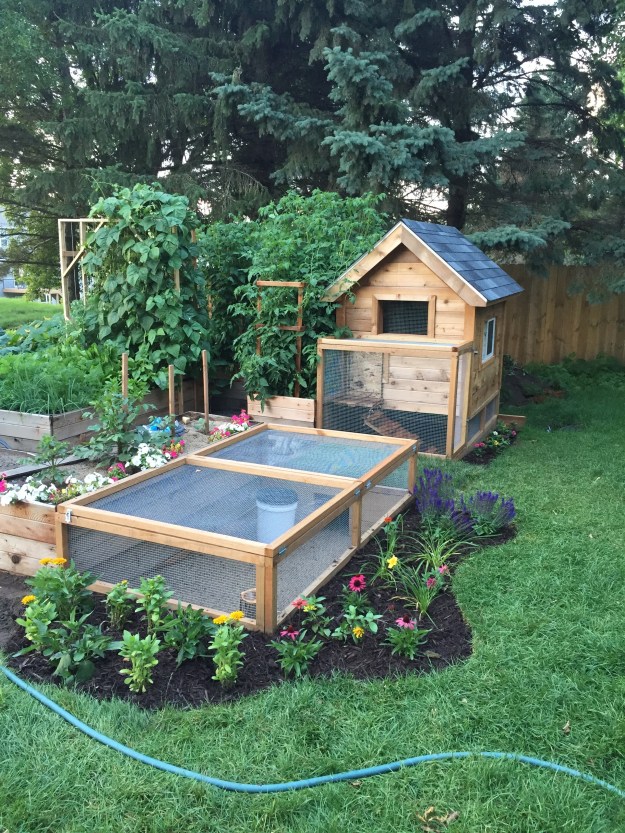
We have a spectacular chicken coop, well-constructed and fully insulated. It’s built along one end of our raised bed garden, with a screened-in run and a roost that is easily accessed for egg gathering. I should dedicate an entire post to how fantastic that whole structure is, actually, and how impressive the concept and creation of it was last spring, but let’s stay focused on eggs for the time being.

Chicken Coop

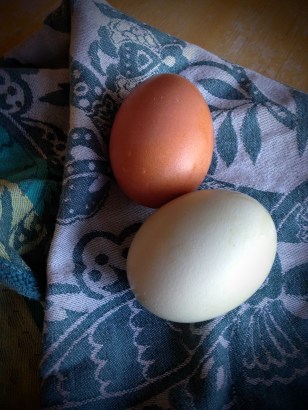
Egg production was sporadic, all summer and fall. For a long time, it seemed that only one chicken was laying eggs – Henny Penny is the biggest and bossiest of the crew (pecking order is real) and I once opened the egg collection door while she was on the roost. That’s when I learned that a seated chicken, from the back, appears to be a pyramid of tail feathers. Her eggs look very much like the brown ones you can get at the grocery store. At some point last summer, there also started to be eggs that were slightly less brown, and a little freckled. Our Easter Egger was supposed to lay blue and green eggs (appropriately IMG_3530named), but didn’t do so until well into the winter. Our chickens took so long to ramp up that we didn’t really notice a decline in production during the colder and shorter days of winter.
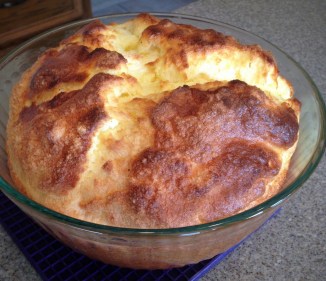
Production has increased in the last week or two, which is a nice reminder that our food really is tied to the earth and the seasons. It feels vaguely springy to me, and so it must to our chickens, as well. We are gathering about four eggs every day, of various sizes and colors. And so, a year into having chickens, I have turned to the egg recipes that I gathered in anticipation of this moment. The frittata was really easy, the souffle a bit more complex, and both were delicious.

***

Ham and Peas Frittata – adjusted from a Real Simple recipe

Ingredients:

  • 3 tablespoons extra-virgin olive oil
  • 1 cup frozen peas
  • 1/4 pound thinly sliced ham, cut into 1-inch pieces
  • 8 large eggs
  • 3 tablespoons milk
  • 1/4 cup grated Parmesan
  • 1/4 teaspoon black pepper

Directions:

Heat oven to 350° F. Heat 1 tablespoon of the oil in an ovenproof nonstick skillet over medium heat. Add the peas and ham and cook, stirring, for 3 minutes.

Meanwhile, in a medium bowl, whisk together the eggs, milk, Parmesan, and pepper. Pour into the skillet and stir.

Bake until browned around the edges and puffed (a knife should come out clean), 15 to 20 minutes. Cut the frittata into triangles and serve with salad.

***

Cheese Souffle – adjusted slightly from Mark Bittman’s How to Cook Everything

IMG_3533

Ingredients:

  • 4 Tbsp butter, plus 1 tsp
  • 1/4 cup flour
  • 1 1/2 cup milk, warmed until hot to the touch
  • 6 eggs, separated
  • salt and pepper to taste
  • 1/2 tsp dry mustard
  • 1 cup finely shredded cheddar

Directions:

Heat the oven to 400° F. Grease a deep 2-quart baking dish with the teaspoon of butter. Warm the milk, separate the eggs, and grate the cheese. Once you start this recipe, things move quickly and you’ll need to be ready.

Place a medium pan over medium heat and add the remaining butter. When it foams, add the flour and turn the heat to medium-low. Cook, stirring, until the mixture darkens a bit, about 3 minutes. Whisk in the milk a little at a time to avoid lumps, then cook until the mixture is thick, just a minute or two longer.

Turn off the heat and stir in the egg yolks, salt, pepper, mustard, and cheese. Beat the egg whites with a pinch of salt, just until they hold soft peaks. Stir a coup of spoonfuls of the beaten whites into the batter, then very gently – and not overly thoroughly – fold in the remaining whites, using a rubber spatula. Be as gentle as possible.

Turn the batter into the prepared dish and bake until the souffle has risen and is browned on top, about 30-40 minutes. Use a thin skewer or knife to check the interior; if it still wet, bake another 5 minutes. If it is just moist, the souffle is done. Serve immediately.

***

Photo credits: mine!

Simply Recipes

There is a blog, called Simply Recipes, that is reliable in every way. It is appropriately named, it is well maintained, and every recipe I have tried has met my every expectation. The clever woman behind the effort is Elise Bauer, and I like to think that if we lived near each other, we would be friends. It seems she was one of the first people who blogged about recipes, which must be how she got such a straightforward name for her website. She takes all the pictures, tries all the recipes before sharing them (or creates them herself), provides clear direction and suggestions, and posts regularly. Her recipes are organized by season and by ingredient and by category, and easily searched.

I have made a lot of her recipes, and with great success. I also find that if I’m stumped about what to make, browsing around on her website is a quick way to get inspired or to chase down a good idea for a particular ingredient. Here are some of my favorites, directly linked in the hope that you will explore her whole website yourself. Enjoy!

Chicken Piccata – an easy way to make chicken seem fancy.

Cajun Chicken Salad – one of my favorite things to have on hand for lunch!

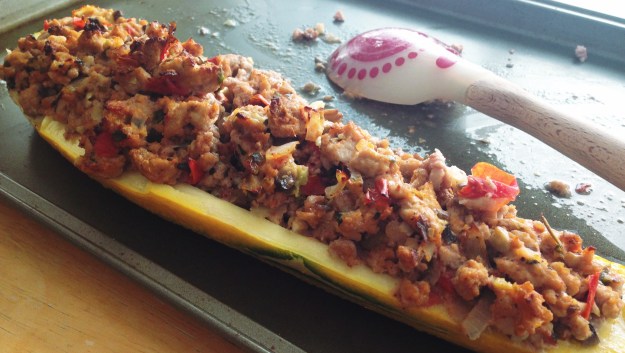
Stuffed Zucchini with Turkey Sausage – a huge hit last summer, and a great way to manage more than one monster zucchini!

IMG_2682

Yes, this enormous vegetable did grow in our garden.

Grilled Skirt Steak Skewers – hands down the best grilled meat that I have assisted in preparing.

Hamburger and Macaroni – basic, cozy, delicious.

Franks and Sauerkraut Paprikash – hotdogs and sauerkraut and sour cream! Hurrah!

Poached Salmon – just as promised.

Easy Coconut Shrimp Curry – versatile and quick!

Spring Minestrone Soup – each spring, I look forward to making this flavorful soup.

Pickled Beets – a nice side dish, or addition to salads.

Zucchini Bread – reason enough to grow zucchini again this summer.

San Antonio, restaurant edition

There’s a lot of good food in San Antonio, and I’ve been lucky to enjoy many meals in the company of the truly wonderful people that I have met and spent some time with here. I’ve also wandered around a bit on my own, resulting in a variety of experiences. The downtown has capitalized on some old mission irrigation systems, and a main feature of any visit should be wandering around on the resulting riverwalk. There’s a section that is densely populated with restaurants, most which present some variation on a Texas theme. They can all blur together a little bit, leading to some of the poorer choices on this list. May that be your warning, future riverwalk diners – be discerning in your selections.

Boudro’s – I can highly recommend this place, which I believe is one of the older riverwalk options. The walls are limestone, which gives the sense that you’re in a cozy cave of some kind. I’ve had both seafood and pasta that were delicious, and they do the thing where they make guacamole on a cart next to your table, which is always fun!

Cafe Ole – I have only the rain to blame for walking into the first option that I saw one evening when I got into town. The food was terrible but service was quick, and when the waiter brought me my bill he offered me delicious orange slices dipped in chili and suggested that if I wanted good Mexican food, I should probably look beyond the riverwalk.

El Mirador – The first breakfast I ever ate in San Antonio was enjoyed in a booth here, at the invitation of this very fine individual.

The Fairmount Hotel’s restaurant is being renovated but I once had a delightful birthday dinner there, hosted by the really lovely individuals from the agency that we work with in San Antonio.

IMG_3328 (1)

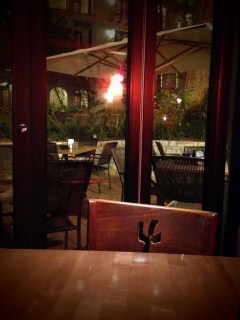
Iron Cactus – Advice from the Cafe Ole guy aside, this is a really nice riverwalk spot, with excellent service and delicious food. I had excellent shrimp enchiladas here (after the waitress warned me that the brisket enchiladas were mushy).

La Gloria – Venturing away from the riverwalk to explore the Pearl Brewery area is very much worth the small effort that it takes. Once there, this chef-run celebration of Mexican street food should be your first stop!

Las Ramblas – Rain to blame again, I stopped in at this hotel restaurant for breakfast one morning without planning very well. I had not-that-great food from a buffet, surrounded by tables full of large families who appeared to be hotel guests. The website claims they have “the best food in San Antonio” but I beg to differ.

Mexican Manhattan – Their website claims they offer “the finest Mexican food,” conveniently located at a junction on the riverwalk. I have witnessed fierce debate about whether or not this is a good lunch choice, but the food I had was fine (though I will admit, not memorable).

2013-10-08 17.55.36.jpg

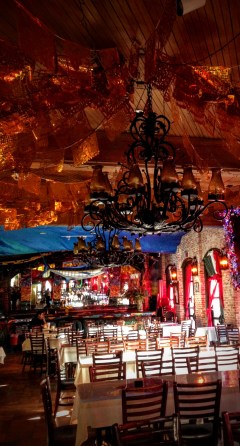
Mi Tierra – Celebrating their 75th year of business, this bakery and restaurant is decorated with “thousands of Christmas lights” at all times of year, and has every combination of eggs and beans and tortillas that you can desire (they serve other meals, too, but I’ve only been for breakfast). I especially like the pumpkin empanadas from the bakery.

The Monterey has closed but I enjoyed a very memorable breakfast at their sunny location in Southtown, some kind of creative take on eggs benedict that was salty and delicious.

Paesano’s – If you’re on the riverwalk and Italian is your thing, this is the place. They’re famous for a pasta shrimp dish that’s quite good, and if you know the right people (as I do!) you can arrange for them to cater a guided riverboat for an evening.

Rita’s on the River – I remember thinking “how bad could it be” one evening after checking into my hotel. The food was okay, but it felt rather like a tourist assembly line. The woman at the table next to me demanded that her dinner be free of vegetables, and that a side of beans was out of the question.

Rosella Coffee Company – A reasonable stroll and a world away from the touristy riverwalk, this coffee shop is in a high-ceilinged industrial sort of space and offered a perfect spot to read and eat a sandwich one afternoon when that was just what I needed.

Ruth’s Chris Steak House – Located in the hotel where I holed up for a rainy weekend with a book, I sat at the bar here one evening just long enough to drink a glass of wine, eat an appetizer, and meet a millionaire. It’s a steak house, as promised.

2014-05-20 15.54.19

Sip – This coffee shop is across the street from a Starbucks and has friendly people and good things to eat and drink. I recommend it.

Supper – This gorgeous restaurant is in a hotel so beautiful it’s as though someone’s fantastical dreams came to life. The food was incredible (brussels sprouts and salad and steak and panna cotta, relatively straightforward and totally outstanding).

Swig Martini Bar – Fun name, fun drink list – there’s a red velvet martini that I assume really tastes like chocolate cake.

Photos, mine!

Seattle!

We spent a delightful weekend in Seattle, visiting my sister and her husband. Our trip began with lunch at the very sophisticated Dahlia Lounge, where we ordered salads and sandwiches and tried the tomato soup. To my great surprise, we prefer my version, though it was supposedly the very same recipe. Our next stop was Kerry Park, for the postcard views of the city. After settling in a bit, we strolled around Ballard and its beautifully curated shops housed in charming old brick buildings. My favorite was The Palm Room, which is very much like a terrifically lush junglIMG_3242e that has just recently been swept spotless and lined with white tile. The plants – the many, many, plants – were discretely tucked into artfully placed containers.


Our destination was Shingletown, for cocktails and snacks. I had the fir-get-me-not, adorned with a sprig of Douglas Fir! We also tried the daily selection of deviled eggs (their classic picnic style and a smoked honey variety), and the brussels sprouts, which were tender and coated in a glaze that hinted at balsamic vinegar. We made a quick stop for take-away treats at Cupcake Royale, including a delicious maple sweet potato concoction, and then we were off to dinner, where I was pleased to discover that Korean barbecue is both an activity and a meal! You cook the meat and vegetables yourself, right on the grill in the center of your table!

Saturday we went to Jade Garden for dim sum, where my favorite item was either the eggplant chunk with shrimp stuck into the center, or the rice and meat rolled up in an enormous leaf. Neither was like anything I had ever eaten before, and both were delicious. Stuffed full of so many small bites of goodness, we drove through the rain and wind to the Boeing plant in Everett, destined for a tour of the facilities. The materials noted that we were in the largest building in the world, by volume. I suppose that other large buildings may be taller or wider, but not… you know, bigger. By volume. We had a friendly and informed tour guide named Marla, who was one of four separate people who declared that any and all cameras and phones would be confiscated, so you’ll just have to imagine how amazing it is to stand on an interior balcony, looking down at dozens of planes in various stages of assembly. A bus took us through the gigantic parking lot, from one end of the building to the other, and at both doors we entered long basement hallways and took freight elevators up to viewing areas. They employ 40,000 people at that Boeing campus.

On the way home we stopped at H Mart, an enormous and well stocked Asian market that reminded me that I should visit United Noodle more often. There was an entire wall of green vegetables, and seafood choices ranging from frozen tilapia to abalone and live lobster. We saw chicken feet and frog legs and dozens of some kind of eel swimming in a bucket. Conveniently, you can also buy pots and pans and kitchen gadgets there. For dinner, we returned to Ballard for sushi at Moshi Moshi, where many things tasted wonderful but the sockeye salmon sashimi absolutely stole the show. We had molten cakes and ice cream at Hot Cakes, wandered around the largest and most interesting furniture consignment store I’ve ever seen, and settled into an evening of board games.

After such a busy Saturday, you’d think we might have rested a bit on Sunday, but we didn’t even consider that possibility. We ventured into the rain for both Mighty O and Top Pot donuts, concluding in a very formal study that the Mighty O selections had a pleasingly crunchy outside and Top Pot had a denser cake. Preferences were divided, though my bias showed once it was revealed that Mighty O is a vegan bakery (the shock! the dismay!).

IMG_3251

The real focus of our day was a trip to Bainbridge Island. The rain slowed and we meandered along the shore, looking at boats and listening to the water splash against the rocks and piers. Everything was very jungly and green, and I thought the holly trees as big as houses were pretty neat until my sister told me they are invasive. We grabbed sandwiches at the nice grocery store in town and then explored the Bloedel Reserve, an incredible public garden with crisply maintained paths winding across fields and through fern-filled woods and down to a lawn overlooking Puget Sound. The Japanese guest house on the property looks across a garden and a small pond, and even in December it was a tumble of texture and color.

We saw the most incredible rainbow on the ferry home – the entire arch was visible over the skyline, right at sunset. My brother in law posted his picture of exactly that on Reddit and has 79,000 views and climbing, but I rather like our picture of it – the tiny green dot in the bottom right is the ferris wheel!

IMG_1943

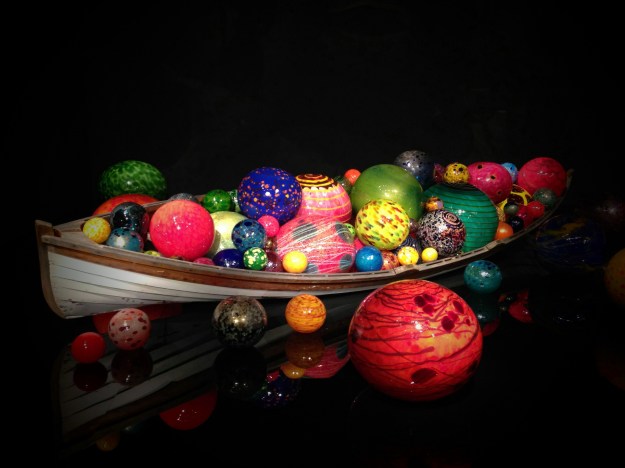
Monday brought some sunshine, and we headed downtown to play at being tourists. Fueled by biscuits from Morsel, we saw a glass blowing demonstration and room after room of breathtaking colorful exhibits at the Chihuly museum, saw the city from above (and Bellevue in the distance) from the observation deck of the Space Needle, and walked to Pike Place Market. We had a late lunch at Lowell’s, watching tug boats guide a full container ship into port as we ate. We learned lots about Seattle history at MOHAI and stopped by the Gates Foundation, before heading home. This being our final night in Seattle, we experienced the “fancy menu” at Staple and Fancy, which means that plate after plate of delicious items are brought to the table based on the chef’s choices that evening. Fried oysters, homemade mozzarella, steak tartare, prosciutto, and seared tuna all made an appearance before the salad course: we were there for almost three hours!

IMG_3258.JPG

Tuesday morning we enjoyed blueberry pancakes at home and stopped by Gas Works Park on the way to the airport. I feel very fortunate to have such an amazing sister, who lives in such a great city.

Photo Credits: my own!

Tomato Soup

Tomato soup of any kind is particularly good with a grilled cheese sandwich, but as a kid it was once served to me in a large warming dish with hotdogs floating in it. Whole ones. Our babysitter that summer was a teenager with younger siblings and a father who was out of work at the local paper mill (by way of either a shutdown or a union strike), so when we ate lunch at her house there were a lot of people around the table. I can’t imagine how many cans of Campbell’s went towards that effort, or of what size, but it made an impression. I don’t remember her mother being present, and it occurs to me now that her salary and that of my teenage babysitter was keeping the family afloat that sunny summer day. To my surprise, the concoction simply tasted like hotdogs and tomato soup, individual items served in one dish.

I really liked that babysitter. She had her driver’s license and access to a car, and a membership to one of those music subscription services where you placed orders by writing tiny numbered codes onto a postcard and mailing it in. She had accidentally ordered an En Vogue tape when she meant to order Vogue, and this qualified as a very exciting mistake, worthy of much discussion. She had a chatty friend with red hair whose boyfriend was about to be deployed, and to think now that they were all about 17 that summer is an odd realization.

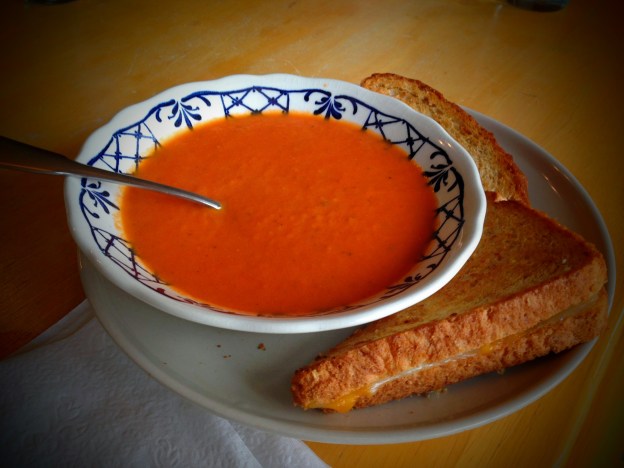
These days, I listen to a lot of podcasts in the car, and I’ve been enjoying the Splendid Table a lot lately. I recently caught Lynne Rosetto Kasper interviewing Tom Douglas, a (many times James Beard award-winning) chef from Seattle. They were talking about a delicious and simple tomato soup, cooking through the conversation. Intrigued, I looked up the recipe, and it is a keeper. The beauty of it, really, is that with a very little bit of planning (you need cream and two 28 oz cans of whole tomatoes), a well stocked cabinet (onions and garlic, a dash of celery seed), and about 20 minutes, this recipe can be made any time. My friend Brooke enjoyed it enough at my house to make it herself the following week, and she reports back that it was a success. I suggest using an immersion blender, if you have one. Floating hotdogs, optional.

Photo, my own.


Aster Cafe

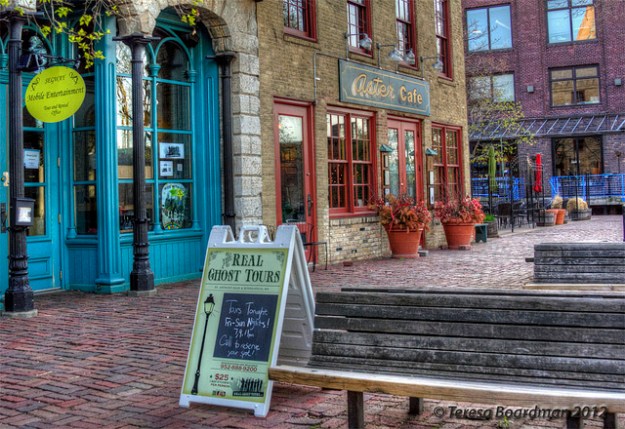
Saint Anthony Main is a lovely part of Minneapolis. It’s the oldest part, the brick streets and buildings surrounding the mills that first represented the city. There’s a small movie theater and a selection of restaurants, plus plenty of park area to explore along the river. If the weather is right and you are inclined to wander a bit, there’s a dramatic dam overlook and a couple of bridges to cross, all with good views. There are festivals in the summer, and decorative lights in the winter.

7170472596_2fb91c4db8_z

My first few times to the area, I ate at Pracna on Main. Famous to some degree for being the oldest restaurant in Minneapolis, the dark space was always frigid, and the food mediocre. Being well located and having a claim on history only gets you so far, and that restaurant recently closed. It was disorienting to eat subpar sweet potato fries in a place that opened in 1890. 

Just down the street – and the hallway, actually – is the Aster Cafe, a gentleman’s tavern to Pracna’s medieval pub (or so I imagine). The brick walls and exposed beams must be just as old, but the temperature is warm and the dim light is charming. The bartender when I last visited was wearing a jaunty vest, and the servers were friendly. Assorted lampshades are scattered around the room, reminding me of evenings at my grandmother’s house. I chose a cocktail 6898712208_6776fb72ff_mfrom their generous list of options, many of which have witty names and contain bitters or fernet. The Daylight Spender is a concoction of apple brandy and orange bitters and mint leaves, among other delights, and I would heartily recommend it. I was leaning towards the Beer Cheese Soup (a common enough offering in this part of the world, but theirs is served with Smoked Paprika Popcorn!), but I was won over by the soup of the day: the Steak Chipotle Chili was heavy on vegetables, while still true to its name.

Sometimes there’s live music, which is absolutely delightful if you like a venue that feels like a living room (it so happens that I do). There’s also a pleasant tree-filled patio, which is a truly lovely place to have lunch in warmer months. Not so many places provide equal parts cozy-fall-evening and leafy-summer-afternoon, with delicious food and clever drinks to match. Aster Cafe is one of them.

Photo Credits:

Aster cafe by Teresa Boardman (CC BY-NC-ND)

Lampshade image by Sharyn Morrow (CC BY-NC-ND)