
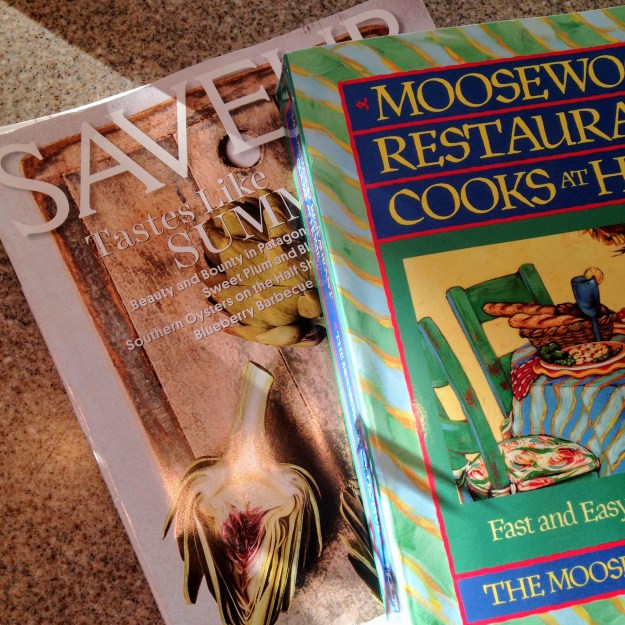
Artichokes are so dramatic, in all their spiky mystery. Last summer, Saveur magazine went so far as to feature them on the cover, split in half so you could see their inner workings. There are, of course, the jarred and marinated artichoke hearts that surface in pasta salads and various chicken dishes, but that’s not what I’m referencing here. Some recipes call for frozen artichokes, which I have never found, but generally replace with canned artichokes. These flavors are familiar, but I believe a real artichoke experience can only be found by eating one whole, leaf by leaf, as a sort of vegetable adventure.
As a kid, we would occasionally have artichokes for dinner – in my memory, they would emerge from a steaming pan, sprinkled with minced garlic. We would pull off the leaves, capturing the delicious meat of each one by scraping with our teeth, and tossing the inedible parts into a central discard bowl. When you got to the center, and navigated around the prickly choke itself, you were rewarded with the heart – a dense chunk of deep but subtle flavoring; the prize inside the vegetable. There was a garlicky mayonnaise to dip everything into, and a real sense of accomplishment to be gained.
As a grown up, I’ve tried a few times to recreate this experience. I’ve known how to prep them – turned on the side, it’s easy to trim 1/4 inch off the artichoke stem and about the same off the top. Kitchen shears are handy for clipping the barbs off the remaining leaves, and with that, they’re ready to cook. I tried steaming them, stem down, and it took close to 90 minutes. I tried steaming them stem up, which was faster, but didn’t allow for any seasonings to nestle in between the leaves as I remembered. I’ve also looked up aioli recipes, and they tend to begin at the raw egg stage, where I want them to begin at the mayonnaise stage. I’ve felt each of these times that I was not quite achieving the goal.
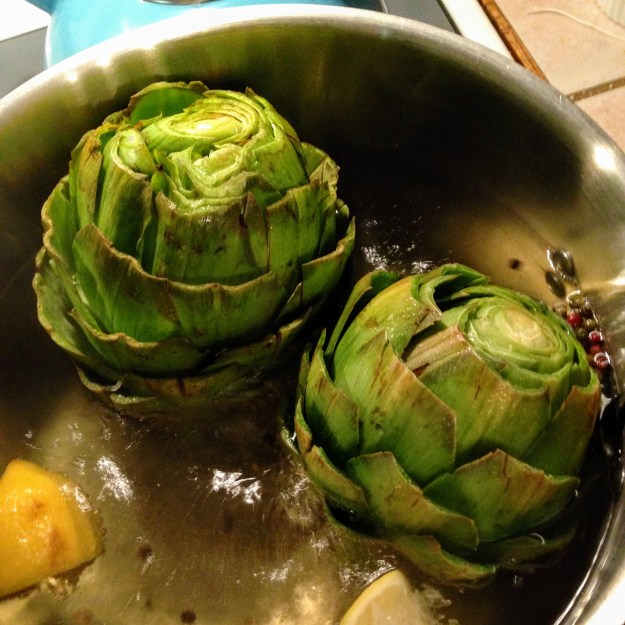
Last weekend, with the assistance of the Moosewood cookbook I’ve had for more than 15 years, everything came together. To my surprise, it includes both “Easiest Artichokes” and “Aioli” recipes – and the suggestion that they be paired. They recommend settling the prepped artichokes, stem down, in about 4 inches of boiling water – and adding whatever seasonings you like to the water itself or sprinkled over the top. In this arrangement, a significant amount of artichoke was above water, but almost immediately, a delightfully artichoke-y steam began sneaking out from the edges of the lid. Half an hour later, they were ready!
Eating an artichoke necessarily slows down a meal and makes it an event. As you work your way through the tough outer leaves, dipping each into the aioli and only eating the edible parts, each bite gets more tender and delicious. When the leaves give way to the poky, feathery, choke at the center, try to pull it back from the edges gently. With a lot of patience and the steady pressure of a butter knife, it is possible to extract and discard the entire choke without cutting into the heart at all – think of this as a culinary challenge. The same caution should be taken when trimming away any tough bits on the stem end, as you want to salvage as much of the heart as is possible (to eat, obviously).
The aioli recipe began with a cup of mayonnaise, and the addition of a bit of garlic, lemon juice, and olive oil resulted in an intense and perfectly complementary dipping sauce for the artichokes. There was more than we needed for the meal, but the leftovers have improved our sandwiches all week.
Whole artichokes for dinner are delicious, and surprisingly easy to make. California artichokes (which you’ll find at your grocery store, probably nestled in a small basket next to the eggplants and leeks) are at their peak from March to May. Select those that are about the size of a grapefruit, and primarily pale green in color. Here are the recipes, adapted slightly from the Moosewood Restaurant Cooks at Home:
Easiest Artichokes
- 4 whole artichokes
- optional, to flavor the cooking water: any combination of bay leaves, peppercorns, lemon juice, vinegar, garlic, capers, or fennel seeds
- optional, to drizzle over the cooked artichokes: juice of 2 lemons, and 4 tsps of olive oil
Bring 4 inches of water to a rapid boil, add whatever flavorings you choose, and trim either end of each artichoke to create a flat base and a flat top. Clip the barbed leaf tips for a nice look – though they will soften when cooked.
When the water boils, ease the trimmed artichokes, stem end down, into the pot. Cover, lower the heat, and simmer for 25-40 minutes, until the bottoms of the artichokes are easily pierced with a fork and the leaves are easy to pull off.
Drain the artichokes, place them upright on a serving plate, and drizzle lemon juice and olive oil over them if you like. Serve immediately (or, chill them and serve later – they’ll last for a few days in the refrigerator if stored in a tight container).
Aioli
- 1 cup mayonnaise
- 3 Tbsp fresh lemon juice
- 2 Tbsp olive oil
- 3-4 garlic cloves, minced
- black pepper to taste
In a small bowl, combine all ingredients. Cover and refrigerated, aioli keeps for about a week.
 pajamasquidblog.com