
I never knew my grandfather, but he was an artist and a gardener, with a great love for plants of all kinds and a particular appreciation for the amaryllis. He knew to let the bulbs go dormant each summer so that blooms could be forced in the winter, and he passed this knowledge down to his daughter-in-law, my mother. Growing up, we always had amaryllis, and I thought of them as an inheritance of sorts from Grandpa Seaverns. We also had leafy and colorful begonias, cyclamen, geranium, and African violets. Our Christmas cactus lived on a bathroom window sill designed for that very purpose and bloomed almost constantly.
When I lived in a dorm room 15 years ago, my mother mailed me a shoebox of bromeliad wrapped in wet paper towels and a clipping of a philodendron, with a note that they’d both be easy to keep alive. She was right – I provide them with a bit of daylight and I water them when they droop, and both are still in my care, along with their various progeny. The bromeliads can’t be stopped, actually – their rich green leaves grow and curl, while baby bromeliads emerge from the shade below. They’ve never flowered in my care but I learned recently that with a bit of hocus pocus, each of those tiny new plants could be persuaded to bloom – just once. The philodendron is leggy and leafy, which I’ve always liked just fine, but apparently if I clipped those trailing vines once in a while, they would grow into a nice cluster of leaves in the pot. Over the years, additional plants have come into my life, but I’m not terribly attentive, and most of them aren’t very happy.
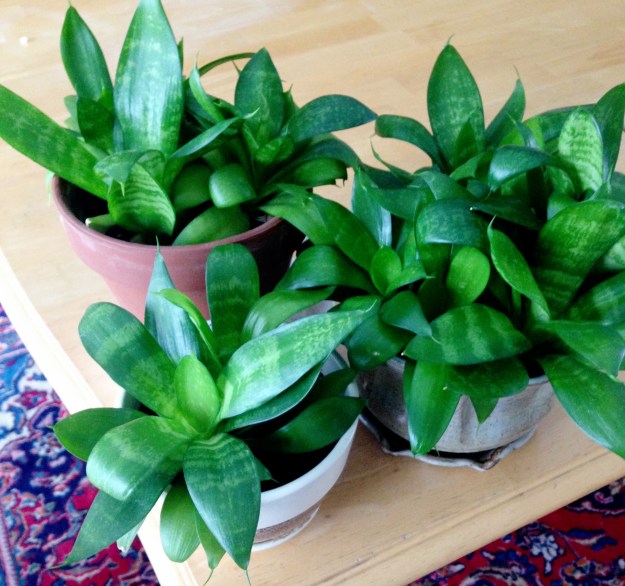
The original bromeliads and their flock.
Most problems can be solved with a spreadsheet, so I started there. I listed all the plants in my care, looked up their preferences, and got everything documented. I didn’t realize that so many houseplants prefer to be root-bound! I flipped through my mother’s houseplant book (which I’ve had on a shelf for years), threw out two of the ugliest spider plants, and put a handful of philodendron clippings into a tall vase full of water. Then I took myself to Gertens and purchased an enormous amaryllis bulb, a Christmas cactus, a few flower pots, and some potting soil. Red and white amaryllis are relatively common, but the apple blossom variety (a favorite in our family) is harder to find, and Gertens had them on hand.
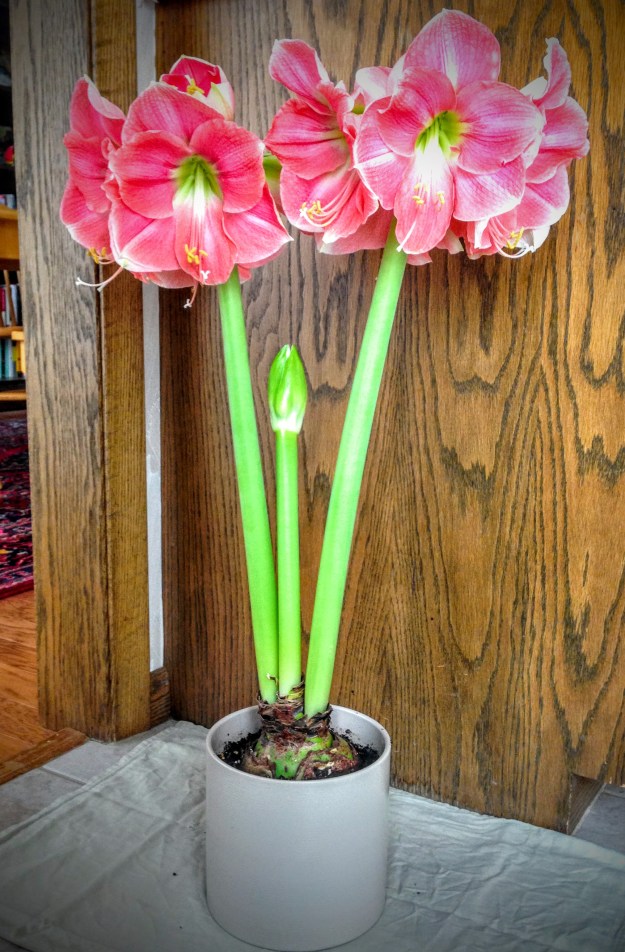
The apple-blossom amaryllis, in its full glory.
Photo credits, mine.
 pajamasquidblog.com
Loved very word. Please keep it up. Thanks for sharing. ❤️
LikeLike
Great to see you carrying on the family traditions. Green plants aplenty!
LikeLike